


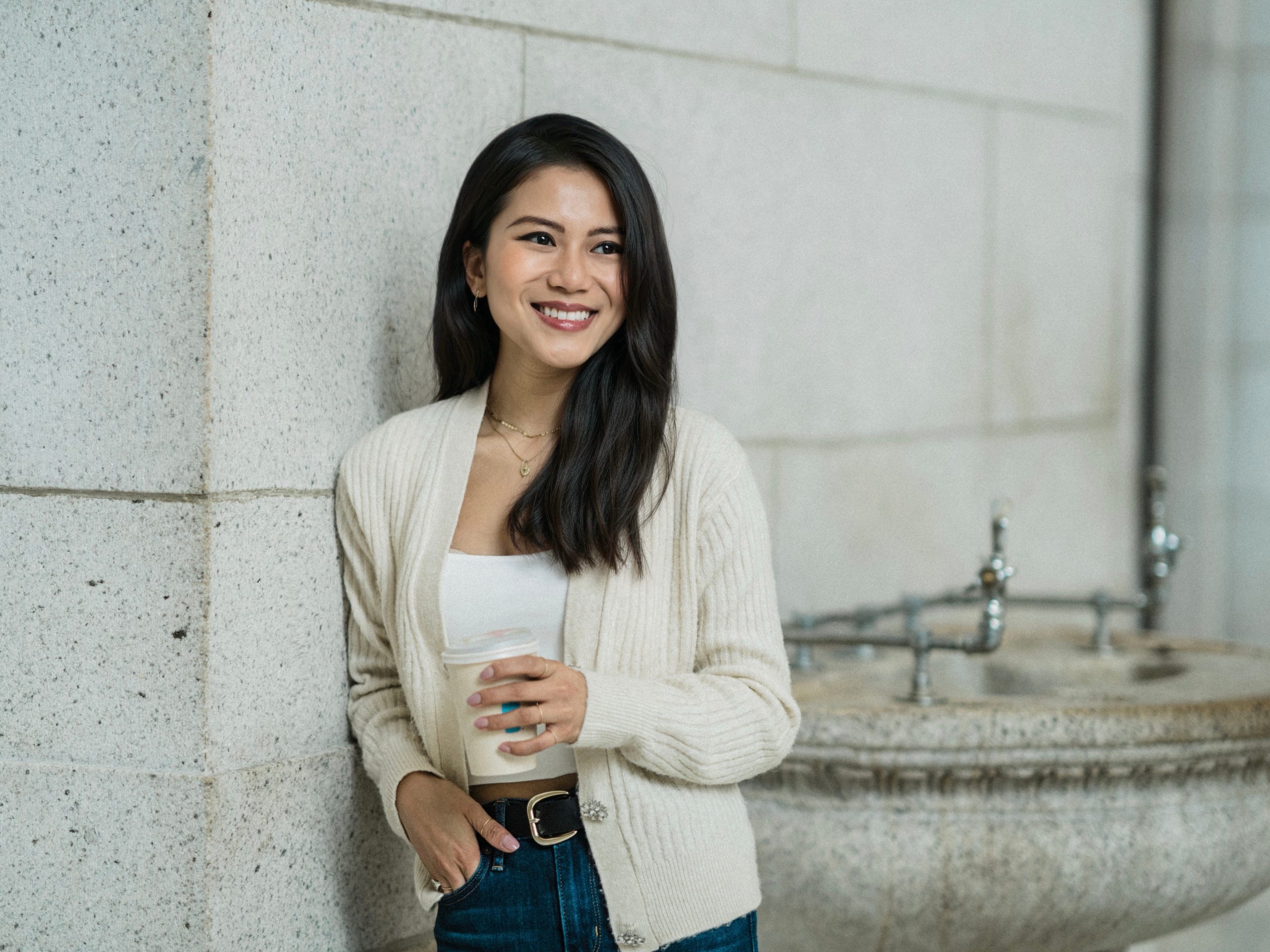
Meet Kimmy Wu, a New-York based licensed psychotherapist and sex therapist, writer, and founder whose work centers on community and creating safer spaces for humans to live and exist in. As a third-culture kid raised between Taiwan and Florida, Kimmy shares how her upbringing shaped a lifelong awareness of emotional safety and the presence of being seen, held, and accepted. After beginning her career in hospitality and corporate marketing in Washington D.C., COVID-19 created an unexpected opening in her path, one that led her back to being in service of others through mental health care. This path led her to pursue her degree at Northwestern University and becoming a licensed psychotherapist and sex therapist helping individuals and couples navigate shame, sexuality, identity, and the work of becoming. Kimmy also explores the liminal space of becoming through her Substack, Between Living and Dreaming, blending personal reflection with cultural critique. She is also the founder of Thirdspace, a platform designed to help people build real, emotionally grounded relationships in an increasingly disconnected world. Across therapy, writing, speaking, and technology, Kimmy’s work is unified by a commitment to care, autonomy, and the belief that safer worlds are built through intentional connection.
Interviewed in August 2025. | Conversation has been edited for clarity and brevity. | Also heads up, there’s some explicit language in this conversation.
Please introduce yourself. My name is Kimmy. I’m just a girl with a wide range of ambitions who wants to help make the world a better, safer place in many ways. Safety is one of those concepts that I often think about, as a woman, in all kinds of contexts we find ourselves in. It’s important to understand that the world is a dangerous place, and the only thing we can truly do is try to create safer spaces for others.
Professionally, I’m a mental health therapist. I specialize in working in sex therapy, but also do trauma work and help folks with all kinds of backgrounds and struggles. Specifically, I love working with people on identity formation, learning about their pasts, and how that past informs who they are today. And dreaming about who they want to become.
I also write about this liminal space of becoming in my own Substack newsletter, Between Living and Dreaming. That’s a passion project that I hold very dearly. Although the intent was to write about that liminal space, I’ve also slowly found myself incorporating cultural commentary into my writing, discussing the things I notice in my work and as a human being navigating the modern world. For example, sharing some of my own critique about how we need to resist the urge to make things easier, even though, yes, of course, I wish people’s lives were easier
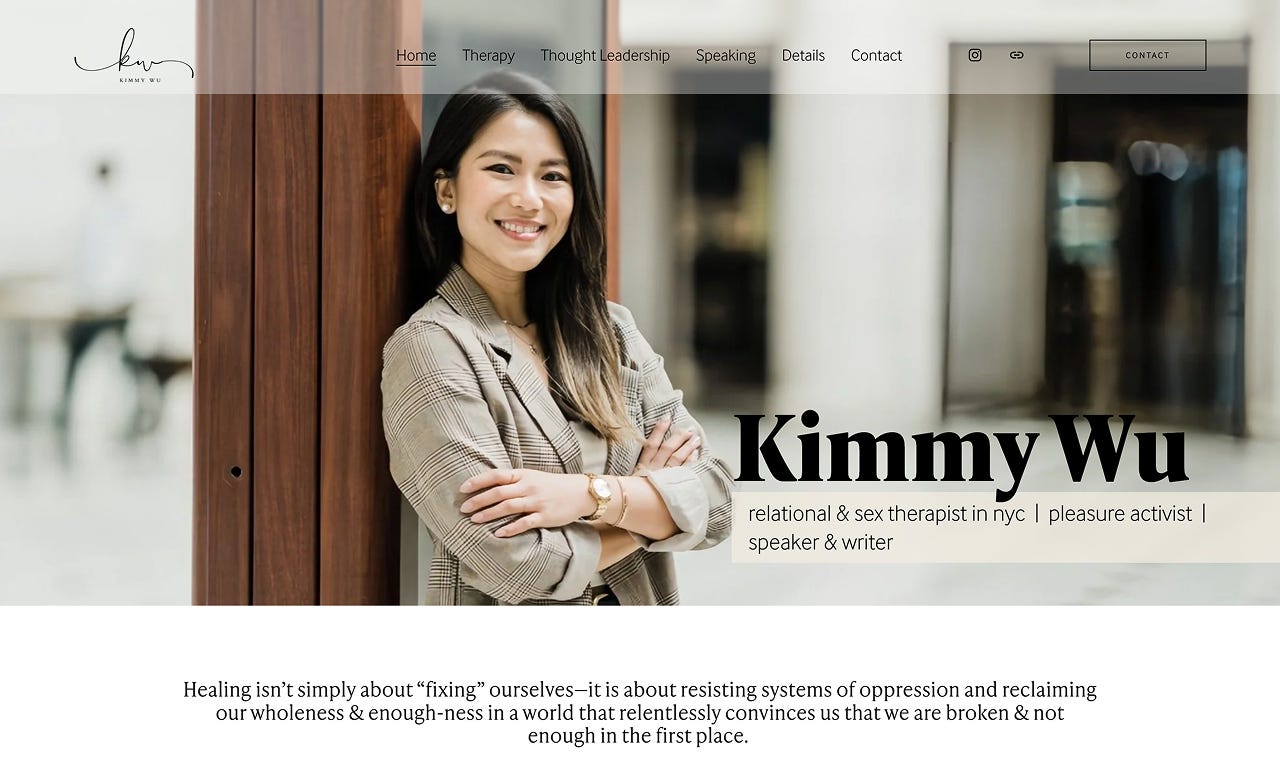
Before becoming a mental health therapist, you had a background in corporate marketing and hospitality. You also grew up in Taiwan and immigrated to the United States at a very young age. Were there any moments in your past lives that were important in shaping who you are now, if at all, especially to your passion around safety? I really appreciate this question. I’ll start from the beginning: I was born and raised in Taiwan, and I moved to the U.S. when I was about 13 or 14.
My observations of safety started when I immigrated, but it was always present, even when I was in Taiwan. Not to flatten the narrative of this being the immigrant experience, but my parents were immigrants. I’m a third-culture kid. My parents moved to Taiwan from Hong Kong, and they’ve been there for 30-40 years to this day. My dad still speaks Mandarin with a slight Cantonese accent.
Even though I was born and raised in Taiwan and very much identify as a Taiwanese person, I knew there was always discrimination towards my parents as immigrants in their workplace, even though they are not a visible minority. That brought on a hyperawareness about what being different meant, and it wasn’t always safe to be different.
From my own experience as an immigrant, I don’t want to say people were malicious or mean to me in any particular way. Teenagers in general can be bullies. There’s a naivety that I didn’t think about. Not that I didn’t think about what safety meant at that time, but it’s more of where I didn’t really know how to define what safety was like. I wanted to be with people all the time. And to this day, I still feel that, but a lot of it came from insecurity about not knowing where I belonged. There was a deep yearning to be known, held, and accepted. To me, that is what safety is. Of course, there are more basic levels of security and safety. This is your own experience. Exactly, and for lack of better words, the definition of safety for me at that time was as a teenager.
So when I say safety, what I really mean is more than just the obvious. I don’t want violence to happen to us. It’s also the emotional safety that is just as important, but folks don’t necessarily think about it as much.

When you immigrated from Taiwan to Florida, did you come on your own? I moved to Naples, Florida, to live with my aunt and uncle. My dad stayed in Taiwan, and he never moved to the U.S. My mom would be the one who came to Florida for six months at a time and went back.
This is something I really appreciate, especially now as an adult, looking back at how much she had to give up for me and my brother to be here six months at a time. And having a new perspective on what that must have been like for someone who really takes my career seriously. I can imagine it wasn’t easy for my mom to decide to give up her career as a physician to become essentially a stay-at-home mom when she was in between two countries, and suddenly, my dad became the sole breadwinner of the home. I hadn’t really thought about how much pressure that must have been for my parents until I was more mature.
There’s a weird dilemma: I wish my parents had shared with me the ways they struggled, but at the same time, I’m grateful that they never really put that pressure on my brother and me. I grew up quite blissfully unaware of the ways my parents struggled, but at the same time, there’s also a lot of mixed messaging that made things very confusing.
For example, if I ever wanted to learn something, my parents would not think twice about paying for lessons or allowing me to pursue any interest. But then, if I wanted something nice, my parents would be like, “Nope, you can’t have that.”
It definitely shaped my value system in many ways. Not that I don’t like nice things, but I absolutely value the education and all the interests that I’ve pursued throughout my life. That’s what I hope to pass on to my children as well.
I’m reminded that my parents were also similar in that, if it were for education, they wouldn’t hesitate to pay for it. My mother was also big on life experiences, and, with limited funds, we would take Chinatown bus tours that brought us to many places, in the safety and familiarity of a Chinese tour guide and guests. It was all about how we could make this work even without the frills, because my parents valued life experiences, and that has also really shaped my values.
As someone who is a pleasure activist and a sex therapist, I very much believe in human freedom to indulge when it’s necessary and also when it’s appropriate. Hopefully, I’ll have the means to buy both experiences and sometimes frivolous things for my children in the future, of course, within reason.
Moving forward in your timeline, how did we arrive at pursuing hospitality and therapy from when you first immigrated to the U.S.? I realized I’ve never identified as a “doer,” but looking back, anything I ever said I was going to do, I actually accomplished. Becoming a therapist is one of them.
In terms of my timeline, I ended up going to college in Orlando at Central Florida. I loved my time there. It was really fun, but I definitely could have taken my academics more seriously. College was the first time I got a taste of what freedom was like—making my own decisions and coming into who I wanted to be, or at least having the space to really think about it. I started off as a pre-med student because I thought wanted to become a doctor, like my parents. I realized organic chemistry was going to be the bane of my existence. And it was. It’s the class that weeds most people out, and I was like, “Nope, I don’t think this is for me.”
Then I just started to go to different lectures on campus, wherever the professors allowed it. I stumbled upon a hospitality class. There’s a warmth in the way [the professor] presented the ethos of hospitality. And as someone who likes to take care of others, that really stood out to me, and I started doing my own inventory of, why did I even want to be a doctor in the first place? Some of those reasons included wanting to be with people, to work with people, and to serve people. There are definitely certain ideals that carried through, even as I decided to then go into business and the hospitality industry.
And I remember, after a semester or two of being a hospitality student, I recall having second thoughts. I was like, “Oh my god, am I making the worst decision of my life, giving up medicine to come into this?” It’s a hard decision, and it would mean a very different kind of life and tax bracket. Real. Yep, and I remember there was a moment where my mom actually was like, “Well, you have to think about this. People like ‘us’, aka doctors, also need vacations. So when you do your job well, and specifically, being in the hotel industry, then that’ll help [doctors] do our jobs better. That’s the moment I was like, “Yeah! Crap, are you my mom?! Like, who are you?”
My mom has nuggets of wisdom that sometimes really surprised me because I love my mom to death, but she sometimes can be quite critical of me. But that was one of the very positive moments that remind me how much she cares—though I’m not even sure if she even remembers that conversation. To me, that was a pivotal and radically self-accepting moment, one in which I felt she gave me permission to have.
And so, I kept pursuing it and ended up having a career in the business of hospitality. However, a few years into my career, COVID hit, and all my hotels were shutting down. While that was happening, I was also confronted by a moment of realization that something felt missing. I came into this career with a lot of interest and curiosity, but I realized that I’m not a good fit for the corporate culture and lifestyle. There are many moments when I feel unsatisfied, like a tiny screw in this big machine.
And not to knock anyone who wants that, because there’s a level of stability and safety that I definitely miss now, as an entrepreneur. But at the same time, there weren’t the kinds of opportunities I wanted to learn more and do more that were freely given to me. Was it also the way you were learning and how you liked to do things was different from what corporate culture was affording you? Yeah. Exactly. And that’s why, when COVID all of a sudden hit and hotels and trips started shutting down, it was really stressful because I was waiting for news of being fired or furloughed. I really appreciated my team and company for doing everything they could at the time to keep me on board for as long as possible, but it was actually a very clarifying moment for me when I was furloughed because despite the financial stress of paying rent in DC, I felt a sense of relief. That felt like an opening for new possibilities and potential. That relief definitely grew over time. As soon as I started coming out of the phase of panic and not really knowing what’s next, I started taking a break for myself.
When you’re in a corporate culture, you’re chugging along. You’re doing everything you can to prove to your bosses that you deserve more opportunities and whatnot. But that was the first time in a long time that I gave myself time and space to read all the books I wanted. And to take care of myself and my body.
Several things have happened since then. I started thinking, obviously, about what I want to do next. Do I really want to stay in this work environment, or is there something else I can do? There’s a part of me considering even business school because, in undergrad, I was intrigued by entrepreneurship.
That’s when I figured maybe I should try opportunities that allowed for more creativity. I started looking into nonprofit marketing, and ended up getting a job at the National Register of Health Service Psychologists, an organization that supports health service psychologists through membership with benefits.
That was one of the stepping stones. And what ended up happening was that I realized I was reading a lot of books that were written by therapists, which I didn’t really register at the time. I was heavily invested in my personal development at that time, and I really wanted to find my own therapist—but I could not find an Asian therapist who was taking new clients or available in my area.
And then I had a life-altering conversation with a friend where he shared all the very tough things he was struggling with at the time. I listened and provided support in the best ways that I could. And, at the end of the call, he said, “I don’t know if you’re going to take me seriously, but I think you should consider being a therapist. I know you’re looking for a new career, and I think you could potentially be a really good fit for that.” And I immediately shut it down because I think there was a part of me that’s like, “Well, I left the medical field to pursue something else, why am I going back to that?”
Another reason was that I didn’t want to go back to school for seven or eight years. I thought I had to get a doctorate degree. I had this misconception that I also had to be fully perfect. I have my own perfectionistic stuff that I’m still working on. I was like, “I’m not stable enough to be a therapist.”
A few weeks went by, and I really could not shake the thought. That’s when you know it’s real. And potentially a really good idea! And that’s when I was like, let me do my due diligence and some research. I decided to start volunteering for the Crisis Text Line because there was so much demand during COVID, and that felt really meaningful. I wasn’t getting paid, and I was feeling really fulfilled. So, maybe there’s something here. Not that I ever doubted my friend, but again, he’s a jokester, so I didn’t really take his suggestion seriously initially.
So then, that’s when I decided I’ll apply to school and we’ll see what happens. If I get in, then great, I’ll do it. I’ll take it as a sign. If not, then I’m just back to where I was anyway, and it’s not a big deal.
I ended up getting into two out of three schools I applied to. That’s incredible! I ultimately chose Northwestern, and I have no regrets. It’s a very rigorous program, and it really prepared me academically and clinically in ways that made me feel very secure going into my practice.
What stands out is that you took an idea and gained more information through smaller achievable tasks to help you make a firmer decision without overwhelming yourself. And each decision helped answer or dispel any assumptions. Yes, there were a lot of actions being taken, and it’s part of the doer identity that I’m slowly identifying in myself. There’s a part of me that needs to make informed decisions. I sometimes like to allow life to happen to me, but in reality, there’s a lot of thoughtfulness to try to put into all the decisions I make in my life. And that’s what living intentionally really means to me.
The rest was history. I graduated from Northwestern and decided to leave DC. It was very bittersweet, but I pursued my dream of living in New York City. Now I’m here, sometimes thriving, sometimes struggling, and meeting a lot of amazing people like you. And really genuinely loving my life. That’s amazing.
Could you explain to folks who may not be as familiar with therapy what a psychotherapist does, and also what a sex therapist does? A psychotherapist is someone who practices talk therapy. We could be broken down into counselors, LMFTs (Licensed Marriage and Family Therapists), or social workers, and most likely have a Master’s. Psychologists have a doctorate degree, and they are also therapists. So I’m a counselor because of the degree I received.
Psychotherapists work with a plethora of different issues. People usually find their own niches within that, but sex therapy is much more niche.
For sex therapy, we only do talk therapy. That’s the part I think people often are like, “What does a sex therapist do?” They also wonder if a sex therapist gets physical with their clients or anything like that. And the answer is no, it’s strictly professional and talking only.
To become a sex therapist, there’s a lot of specialized training and certifications that you have to go through. The certification part is not required, but there are specific training programs that you don’t get in regular grad school. So it’s in addition to what you’re doing.
Why did you choose to pursue sex therapy? Personally, I think sexuality is one of those topics that we don’t really talk about, but we really should. That’s my personal opinion. I can’t pinpoint a specific moment when I decided to be a niche sex therapist. Throughout my career, I’ve always been very curious about the topics of sex.
For some context, I come from a religious family, so it was a pretty sex negative space, which is ironic because my mom’s an OB/GYN. It was always like, “no sex until you’re married” kind of thing. I realized, personally, I had a lot of shame around sexuality and a lot of misconceptions throughout my life that informed my curiosity. My mom says certain things, the church says certain things, but I don’t know that I believe in that.
I am also someone who likes to do things that other people don’t want to do or haven’t done yet. It’s not about being original; if no one else is doing it, I’ll do it. Pursuing sex therapy was kind of the same, knowing that sexuality is such a taboo, along with mental health being a taboo in the AAPI community. And so, I decided that’s where I need to go.
I don’t want to lump Asian or Asian American culture in one, but I do know that discussing sex or the topic of it isn’t openly taught. Maybe we’re similar, but what I’m picking up is that you and I both like to have more information, and thus we want to ask questions to learn more. Because there is freedom in having this level of epistemic curiosity to be able to form my own thoughts, opinions, values, and principles. Other people are telling us, and we’re just taking the word as it is, like, “oh, I’m supposed to do this now,” but, innately, for you and me, we’re like, “no wait, I want to understand more as to why.” And then I want to make my own decisions and form my own point of view.
Now that it’s been a couple of years into your career as a therapist, have there been any interesting surprises or any lessons you’ve been learning along the way? Where do I begin! There are so many layers to this.
I have learned so much about myself through this work in reflecting on my clients and how my way of interacting with them has shown me who I am in different kinds of contexts. It’s shown me my own limitations as a human being, which is extremely humbling and freeing at the same time. And my capacity for love and for care, and also this undying tenacity with me to want to bring more freedom and love to the world.
I have learned so much about myself through this work in reflecting on my clients and how my way of interacting with them has shown me who I am in different kinds of contexts. It's shown me my own limitations as a human being, which is extremely humbling and freeing at the same time. And my capacity for love and for care, and also this undying tenacity with me to want to bring more freedom and love to the world.
This is also a part of why I think sex therapy is a big piece of activism I care deeply about. There’s a lot of freedom, historically, in the way we fought for sexual freedom that is both political and personal. And as someone who is a radicalized healer, I would say, this is one of those spaces that isn’t just a personal thing. Sexuality is connected to our bodies, and our bodies are now under attack by the current administration and by many of the social systems we live under. Something that I learned about myself is that I will not rest until change happens or until I feel like I’ve done enough to contribute to a safer and freer world for the next generation. That’s a big part of why I do the things that I do.
Then there’s the interpersonal piece: being able to really connect with these amazing humans who sit in front of me week after week to talk about some of the most difficult and most beautiful moments in their lives. It’s such a privilege.
We started this conversation about what humanity is, and I witness it every day. I don’t want to give a specific definition of what humanity is, but we are human, and there’s something really beautiful about that. To be two humans facing each other and seeing each other in that.
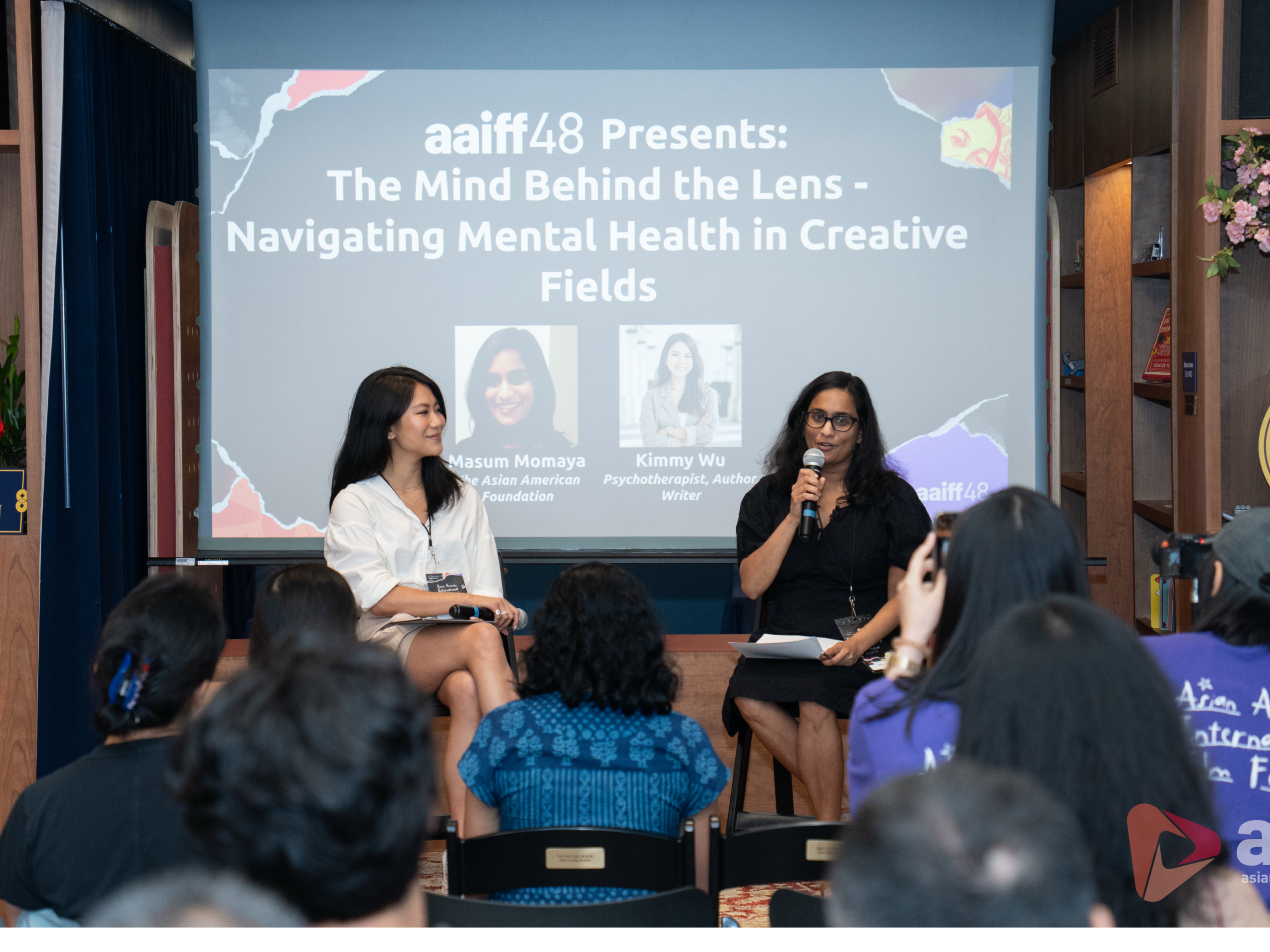
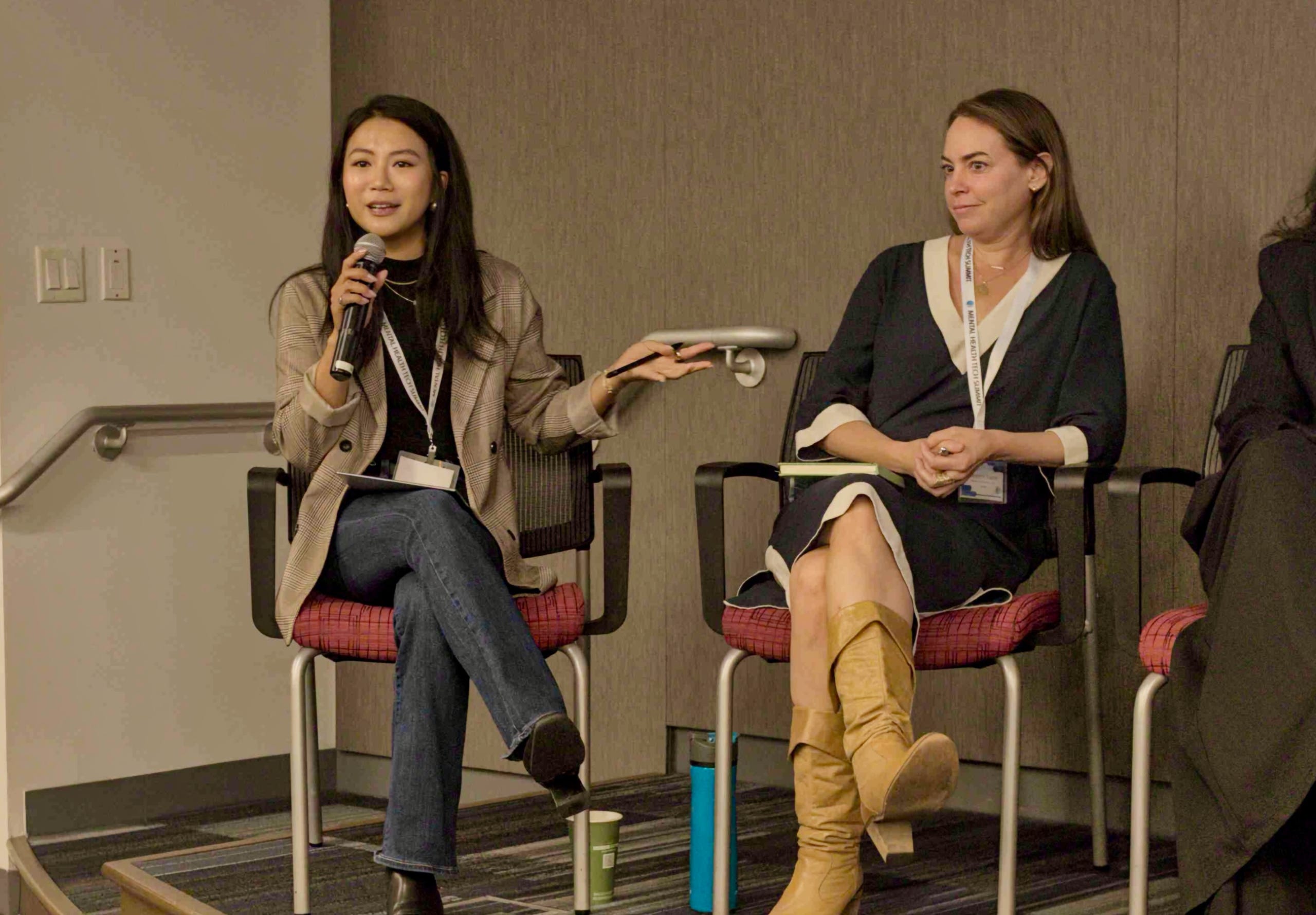
From the therapy side, that’s very one-on-one interactions. I have personally witnessed you as a speaker at two forums: as a moderator for Dr. Stacey Litam’s book launch and as a speaker at the Asian American Film Festival’s conversation on “The Mind Behind the Lens - Navigating Mental Health in Creative Fields.” And from our own conversations, I know you want to continue to do more speaking engagements. What are your hopes or goals for expanding through speaking engagements? And, what have these engagements taught you? It’s been an ever-evolving thing for me to try to understand what my message is to the world. There are so many that I could touch on. As someone who just started writing publicly, I’m realizing that the kind of information I want to share with the world is about empowerment for personal autonomy. And not allowing systems to control and oppress. In many ways, that touches on the work of moderating for one of my mentors (Dr. Stacey Litam) and her book, and on advocating for the framework she’s developed and the intergenerational healing she stands for.
And on top of that, working with the film festival was really particularly meaningful in supporting other AAPI storytellers who also have their own messages that they want to share with the world. At the end of the day, they’re the biggest realization that I am just one of many voices. I can both hold importance and dignity in the words that I share and, at the same time, realize that there are so many people out there trying to do the same. There’s something just really beautiful about that nuance. And, as I get to know more people in the film industry, I am realizing that storytelling is an important part of humanity.
...I can both hold importance and dignity in the words that I share and, at the same time, realize that there are so many people out there trying to do the same. There’s something just really beautiful about that nuance. And, as I get to know more and more people in the film industry, I am realizing that storytelling is such an important part of humanity.
As someone who practices narrative therapy, I believe in writing our own stories and endings that are not doomed to fail from the beginning. There’s a freedom in deciding that even though I know I’m figuring out and have certain patterns, we’re not doomed to keep repeating them.
I actually wrote a song about that, and it's a little bit of an acknowledgement to my own trauma in the past and how that's informed different kinds of patterns in my life. But there's a very hopeful ending that alludes to this self-choosing and radical self-acceptance, which allows me to really step into my own power and make different decisions that go against the grain. That has also allowed me to meet other people who have been supportive and holding me when I feel it's difficult to go against my own brain in my own personal healing, which makes me feel really safe and really loved. That's a lot of positivity in the message of, “you get to write your own story, and we're not doomed.” We don't have to be.
A phrase that keeps coming to mind is that you want to be “part of the conversation.” That, and you are finding ways to be an active participant in conversation. Because everyone can chime in on something, but it’s about how you do it with a lot of intentionality that can help touch another person. That, and they can do the same for you. Whether that is in your one-on-one therapy sessions, the talks, or writing for your Substack.
In addition to speaking and writing, you’re also a startup founder, right? Yes, and all that I do is very much connected.
My startup started as a random idea where I woke up one day last fall and was like, “What if I built an app to help people learn how to be more empathetic towards each other?” Because there are so many ways that we are so focused on our own needs and egocentric ways of being, especially in modern society. We’re so focused on our own survival that we forget about other people and forget to witness other people’s humanity and their struggles.
The idea started snowballing into my startup, called Thirdspace. It’s not a literal space, but hopefully becomes a tool that helps us learn to connect better with each other. The premise is that it’s meant to be an AI companion/guide that enables you to reflect a little more on your relational patterns, and to be scaffolding for the ways we can show up for each other.
I want to preface by saying that [Thirdspace] is not meant to replace therapy in any way. It’s a tool that helps you connect with yourself and, in turn, connect better with other people. I’m building a curriculum for some skills development, and the framework I created focuses on community roles.
We talk about belonging in such an egocentric way: “How do I belong?” Or, “how do I get other people to accept me?” Which is important, but something that came to me in the past few months is,” Why don’t we ever talk about what roles we take up in community?” Some people are naturally better at noticing others’ needs and therefore at caring for them. These are the caretakers. Then there are some people who are natural leaders and are unafraid to say, “Hey, I noticed we’re a little stagnant. Here are some of the things we can do right now.” Then, certain visionaries are incredible at seeing what’s possible. These are just a few examples.
I started mapping out [the framework] based on the people I know. I explored which qualities help them shine in the community. I created 12 roles, and that will inform the framework and what Thirdspace will be doing.
It’s not meant to be a regular personality assessment where you take it once and never think about it ever again. You use it, talk about it, and then connect theory to practice. Now that we know this is what makes us who we are, how do we operationalize this information? We’ve spoken about Thirdspace before, and in addition to the framework, it’s also not meant to be rigid. Exactly, it’s dynamic. You might identify with one role, but in different context and seasonality in life, you can become something else as well. It doesn’t mean you’re only one or the other.
At the end of the day, why is all that you’re doing important to you? It’s important to me because I genuinely want people to live more connected lives. I love people and humans. As someone who has seen a lot and dealt with a lot, I have never ever gotten to a place where I was ready to give up on humanity. There’s a part of me that radically loves humans and our capacity to love and be with each other.
Now that I’m saying that out loud, there’s definitely a part of me that knew what it was like to not understand what belonging felt like, and that deeply lonely yearning part of me wants to make sure that other people don’t have to experience that if I can help it.
As a therapist, there’s one-on-one support. The startup [Thirdspace] is more about finding a scalable way to deliver greater impact than I can as an individual. Writing and speaking engagements are also the same—just really hoping that people know that there are people out there working actively to make the world a safer and better place for everybody. Selfishly, I want to build a world where hopefully my future children can also safely belong.
That’s very hard to do, but incredible to do it and keep pushing on everything you’re doing. It’s very clear to me that, throughout my life, I’ve started thinking more about why I do the things I do. There’s a huge part of me that’s really big on wanting to contribute to the world so that the next generation can live better lives than we do. Maybe it’s because I watched a lot of Naruto growing up! Laughing
Are there any common misconceptions about you or the industry you’re in that you’d like to dispel? I’ve definitely thought about this before and never really tried to confirm with anybody if that’s an actual misconception or something I made up in my mind.
I have a tough exterior, at least I think I do. As women, we’ve had to survive so much. And as an immigrant, there are so many parts of my story that made it so that I had to be very independent, strong, and tough in my own ways.
But, there’s also an incredibly gentle and tender part of me that doesn’t always get shown as easily. I wouldn’t say I’m not vulnerable, but my vulnerability has always seemed prickly because, again, it has its own built-in protective mechanism. So, maybe a misconception is that I’m just a tough person, which is so contradictory to the softness that I try to bring into my therapeutic work.
Totally, and earlier today, we had chatted about wanting to be in our “soft girl era.” There’s a perception of who you are and then what people perceive you as. You know who you are deep down, and it’s like, how do I help others see that version of me as well? It’s not required, but it’s nice that you know that about yourself and can share it with others.
I don’t see you as someone with a hard exterior; instead, you’re really passionate about what you care about and want for the world. Some people think that’s very scary because they don’t know how to do that themselves. Oftentimes, especially if the perception of an Asian woman is that we’re supposed to be soft and submissive, the moment we have an opinion or point of view, it breaks a sort of mental model people might have about us. And we often operate on a spectrum where people can only understand if you’re “this” or “that”, not maybe somewhere in between or both.
And finally, do you have any advice for a younger version of you? If there’s one thing, it would be to let a younger version of me know how loved she is. Like how deeply loved and cared for she was. I’m getting emotional when I think about that.
There’s an existential loneliness I’ve carried throughout my life that’s been so overwhelming. As humans, we’re born alone and we die alone. There’s something really scary about that to me, but it’s also something natural.
There are so many micro moments in my life when I thought I had to be really perfect to be accepted, loved, and cared for, when in reality that was already given and true. But I didn’t really know how to accept it or how to even see it. I don’t blame her. That’s the kind of environment she was in. That’s how I reacted to the world and the people around me,, but there’s a part of me that recognizes that I was really, really loved.
To this day, there’s still a tiny part of me that feels like I have to earn love, belonging, and care that probably will forever be there. But there’s also been a lot of healing over the years, where I’ve learned to love myself in ways I didn’t before. That level of permission we give ourselves and the space to choose to react differently to the parts of us are critical. Not that I would wish my life had happened differently, but I wish I had realized sooner.
Would you tell your younger self she is loved? Yeah, she is so loved and exquisite.
I’m planning a podcast called “Exquisitely Human” right now. It’s a term that my therapist gifted me. She would say, “Well, Kimmy, that’s just exquisite.” It just really stuck with me since. It’s like making space for not just the black and white but everything that goes in between.
Thank you for sharing that. I love this question in particular because, especially for folks in this later stage of life, they’re often asked about their life experiences, but in reality, we’re still learning. All I know is what I experienced before, and it’s lovely to take a moment to think back for ourselves because there’s a lot of life ahead of us, but there’s also a lot of life that was lived before. How do we still love ourselves as we continue moving forward? Because it’s not a new journey each time, we’re building on our current one. Exactly, there’s so much wisdom in taking inventory of all those moments that we’ve survived and lived.
What’s a song you currently have on repeat?
最後一頁 by 江語晨
This was a song I knew as a teenager. There’s something about lyrics in Chinese or Taiwanese pop songs from the past that has this whole narrative and something very lyrical and poetic. There’s so much meaning in every word.
The core of this song says,” I want to hold you, and I’m also fearful of letting you see the tear that’s about to fall.” It’s very emotional, and it’s a really pretty song.
What are three things you’re really enjoying right now that you want to share with other people?
Traveling. I recently went on a trip with our friends, Alfred and Justin, and it was freaking amazing, which I wrote about in my newsletter. There’s something deeply nourishing when you’re in a foreign country or city, just a place you’re so unfamiliar with, and it can be both uncomfortable and extremely revealing. The first thing I do when I get somewhere is always ground myself with a cup of coffee.
Reach out to a friend. Reach out to somebody, even if you are not good friends yet. I’m all about leaning into your curiosity in life, whether it’s a random topic you’re passionate about or a friendly person you know, like an acquaintance. Then find out what it is that they are really about. That’s something I wish more people did. Looking at the relational landscape, not just the romantic one: we’re so in our own world sometimes. There’s something really nice about having the technology to reach out to anyone and DM them about what they do. Or even learn a little more about them and show that, “hey, I know we’re not close, but I’m thinking of you and wanted you to know that I see you.” Some of my best friendships only happened because I was like, “I don’t know you, you seem pretty cool... can we hang out?” And that’s how it all happened. Then, of course, there’s the follow-through piece. And that’s the doer. You have to keep reaching out, keep hanging out to really build a relationship. Often, I notice you only see people in specific contexts, such as parties or group hangs. But friendships are multifaceted. If you only see someone at a party, that’s your party friend, but that’s not your friend who, when shit hits the fan, is there for you. Are they going to walk your dog for you if you can’t make it home? Part of it for me is about resisting a lonelier world, and we’re all culprits of breeding that kind of dynamic.
A repair after a rupture can be very powerful. For example, I was recently in a dating “rupture,” which is a strong word. He used the word “friend,” and I was really heartbroken by that. After going no-contact for a while, we had a conversation that was initially difficult and frustrating until I finally shared my worries and struggles in my personal life that he didn’t have context on. The vulnerability allowed both of us to soften and realize, “Oh damn, it’s not me versus you.” We started the conversation fighting for ourselves, and eventually we were able to face the thing together. It showed me that I have the ability and capacity to fix things between us. This is also important in friendships. Any ruptures we don’t attempt to repair are lost opportunities for more connection. And in many ways, this is both the part of me that loves deeply and part of me that knows how lonely life can be.
There are so many people in the world, and yet we’re sitting next to each other. To me, that’s not a coincidence. That’s a miracle and I want to treat the relationship as that. There’s so much dignity, love, and respect that I have for people who I get to orbit around and who I allow in my life. There’s a seriousness that I wish people could see. It’s not “if you don’t work out, I’ll find someone else.” In so many ways, modern society has taught us that we’re expendable to each other. My interpretation of what you’re saying is that it’s important to try together. Yes, whether in romantic, friendship, or family. There’s a lot of value in trying.
Enjoyed the Conversation with Kimmy Wu? You can find her at www.kimmywu.com, @asiansextherapist on Instagram, and on Substack, Between Living and Dreaming.
Kimmy Wu is also passionate about giving back the American Civil Liberties Union (ACLU) because, in her words, “fuck ICE and fuck this administration. No amount of therapy can fix human rights violations. We need system reform.”
The ACLU’s mission is to create a more perfect union — beyond one person, party, or side. And to realize this promise of the United States Constitution for all and expand the reach of its guarantees. As part of this Conversation, a donation was made to the ACLU.
You can support the ACLU by donating directly.
west & ease is part of & luo studio, where I do fractional design consulting, design coaching, and host creative community events. If you’re a brand, team, or creative partner interested in collaborating, I’d love to connect. You can learn more and reach out at andluo.studio.