

A quick reintroduction for anyone new here: Hi, I’m Leslie and I’m a product designer. I’ve spent the last decade-plus building with early-stage startups and larger tech teams. Now I run my own studio, & luo studio, as a fractional product design partner for teams building meaningful experiences.
If you’ve followed along here for a while, you probably know me more for the creative side of my life including the gatherings I host and the creatives I love featuring. But lately I’ve been wanting to open up to share the projects I’m diving into. So I’m trying something new with this one: a bit of behind-the-scenes.
For a while now I’ve been embedded with the team building Postcards. Jared, the founder, and a friend, recently wrote about why we made it and what it means to him: his case for social media in its purest form, sharing with the people you actually know. I want to share the other side: what it was like to actually design it (so far).
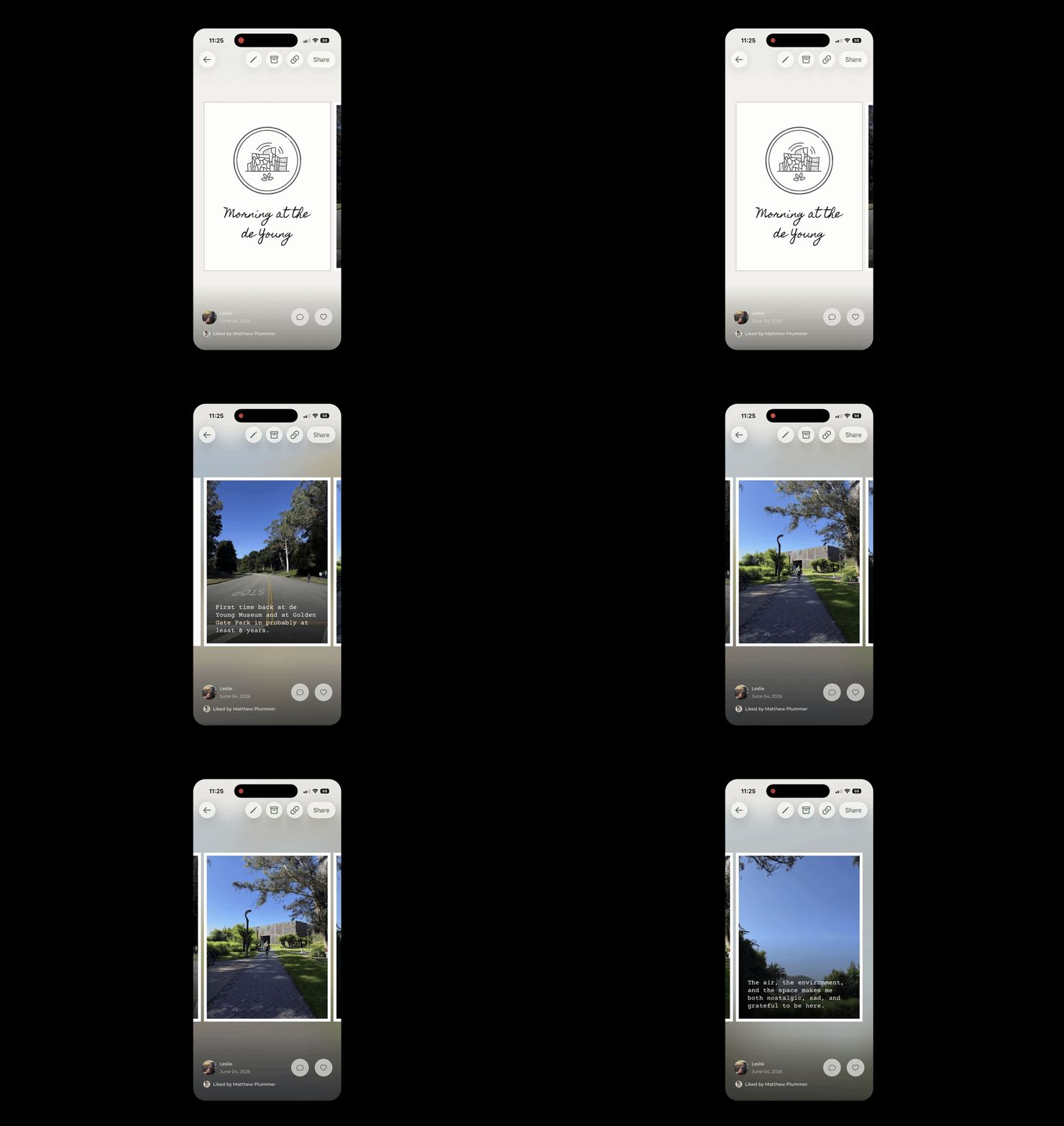
None of us really knew what AI could do yet when we started but were curious about the possibilities. That sounds a bit silly now, but at the time it felt like a whole thing worth exploring. There were new tools every week (and still), everyone online had a take, and it would have been so easy to freeze up trying to figure out the “right” way to build something. Instead we kept saying the same thing to each other: let’s just try. Try the tool, try the idea, try the version that probably won’t work. That ended up being the most important thing we did.
The starting point
What most people see when they open Postcards today is a social app for your close friends. That’s not what we set out to build initially.
When I started designing the first version, it was actually a mobile version of an AI memoir experience called The Biographer. You could speak or type about a memory, a photo, or whatever was on your mind. We had an LLM companion called Boswell, and the idea was that you’d talk to it, have a back and forth conversation like with a real human, and immediately afterward it would turn that into a beautiful narrative you could read, share, and add different perspectives with people who were part of the story.
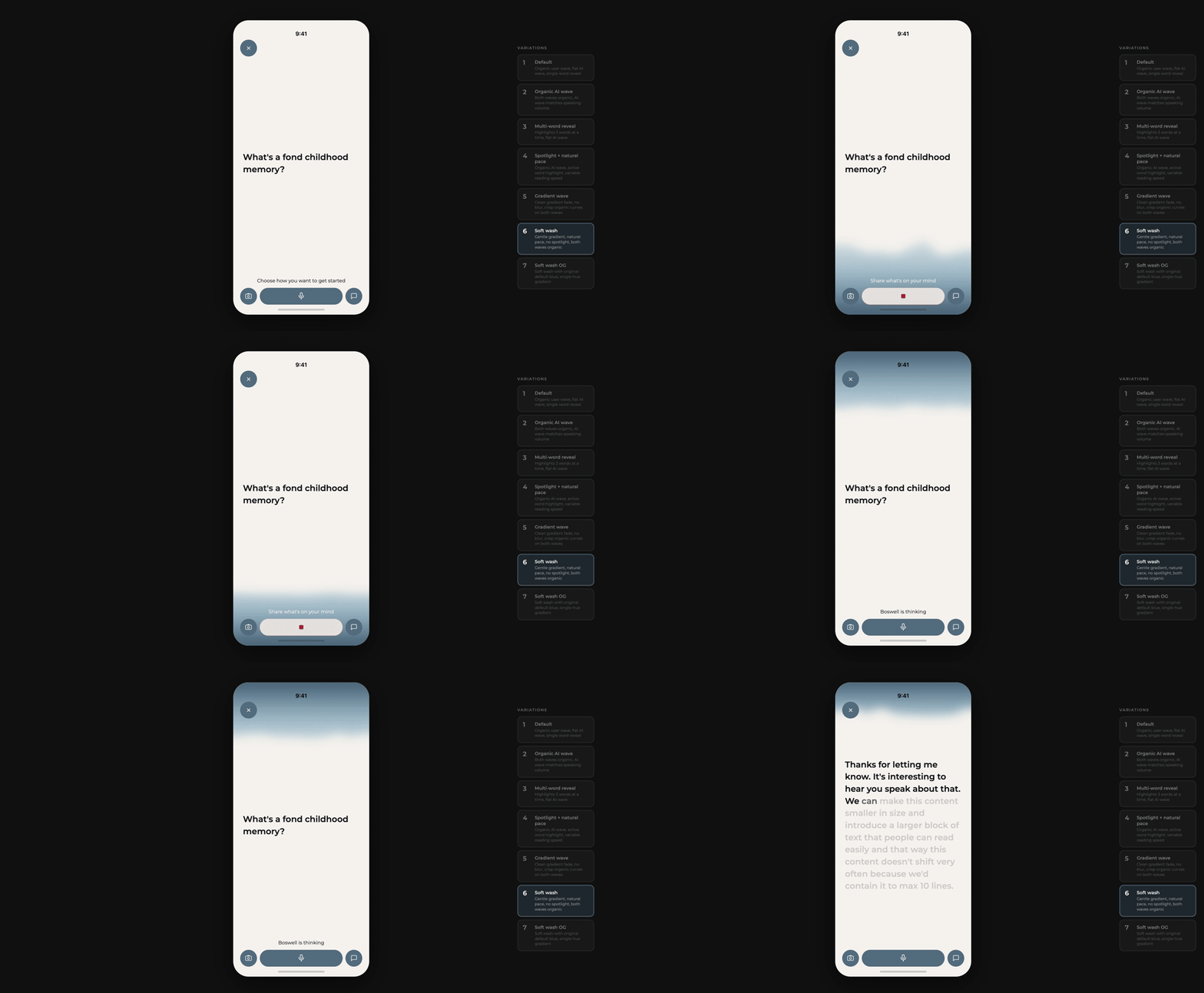
I genuinely thought of this as a storytelling tool, not social media and there was so much space for personal narratives, where someone could just talk and watch their story come to life. This idea still excites me.
What didn’t work
But when we put it in front of friends and family, the long-form narrative didn’t quite land. The output was verbose. It sometimes didn’t capture the essence of what someone was actually saying. The writing shifted from person to person, and I kept wanting to go back and edit except I hadn’t designed the editing experience yet either. It just felt cumbersome. Plus, Boswell’s conversation was just a bit awkward or we’d lose the audio which was the core of the story.
Jared had this hunch early on that people weren’t going to read long-form. I resisted it for a while because I really believed in the long-form style. It was personal to me and then I had to sit with the fact that he could be right. That’s the part of trying nobody really warns you about: sometimes you try, and the thing you believed in doesn’t work, and you have to let it go. It helped that the team made that feel okay.
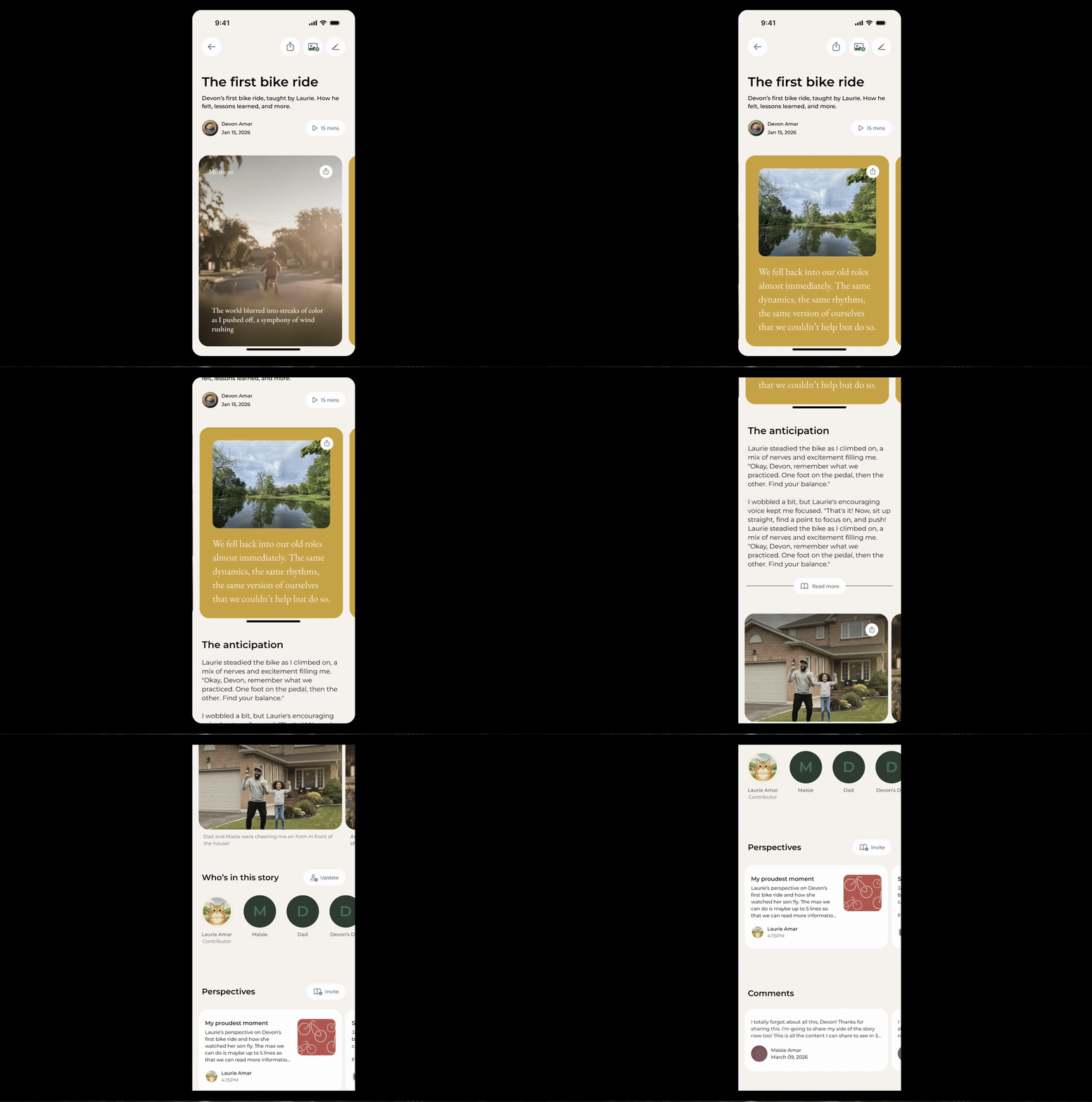
What actually resonated was the idea of “beats.” Boswell would listen to someone’s raw story and pull out the key moments, like a synopsis. We had initially designed cards you could swipe through to follow the beats of the storyline right above where we displayed the long-form narrative. Think of it as the bullet points of someone’s story, but visual.
People loved those.
The one-week bet
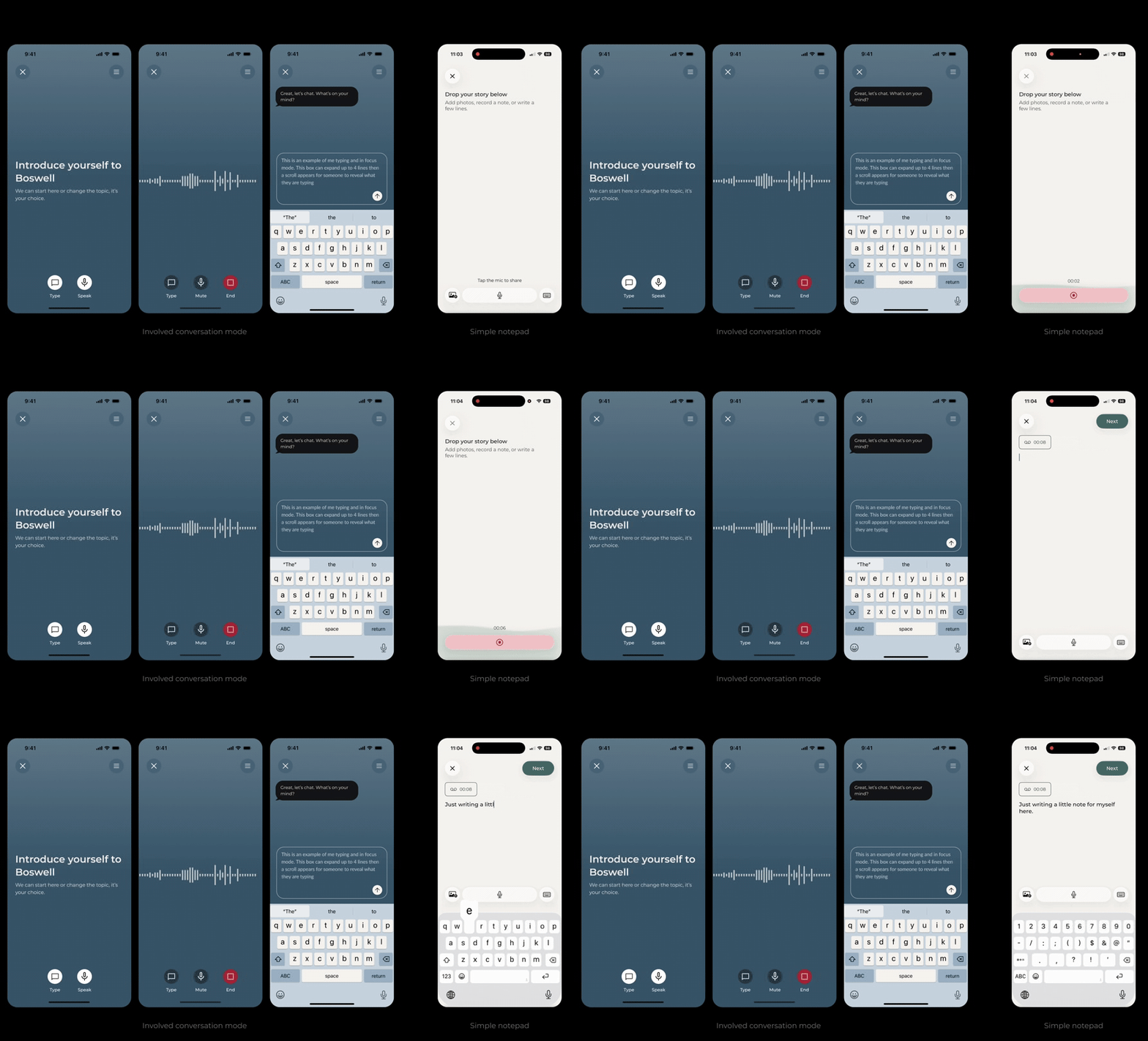
So we had a really candid conversation. Jared and his co-founder Avi still believed in The Biographer. Plummer, our engineer, and I believed there was something in the cards, and we wanted one week to figure it out while we simultaneously built both products. My biggest push was to not call them “beat cards” because if you have no idea what a beat is, it makes no sense. After a quick iteration we landed on “Postcards”, because they were cards, and something you’d actually want to send to a friend.
We stripped everything out. I redesigned the whole input from an interactive voice experience into something that feels like opening a blank page. Drop in a voice note, type some stuff, upload a photo. Don’t edit it. Don’t overthink it. Then the LLM helps you make something beautiful including both the words and the visuals.
The illustrations surprised all of us. When someone didn’t have photos, the LLM would generate these really lovely drawings relevant to their story. It was like someone sketching out your story for you, phrase by phrase. We just knew something magical was happening, something that could make storytelling so much more visual.
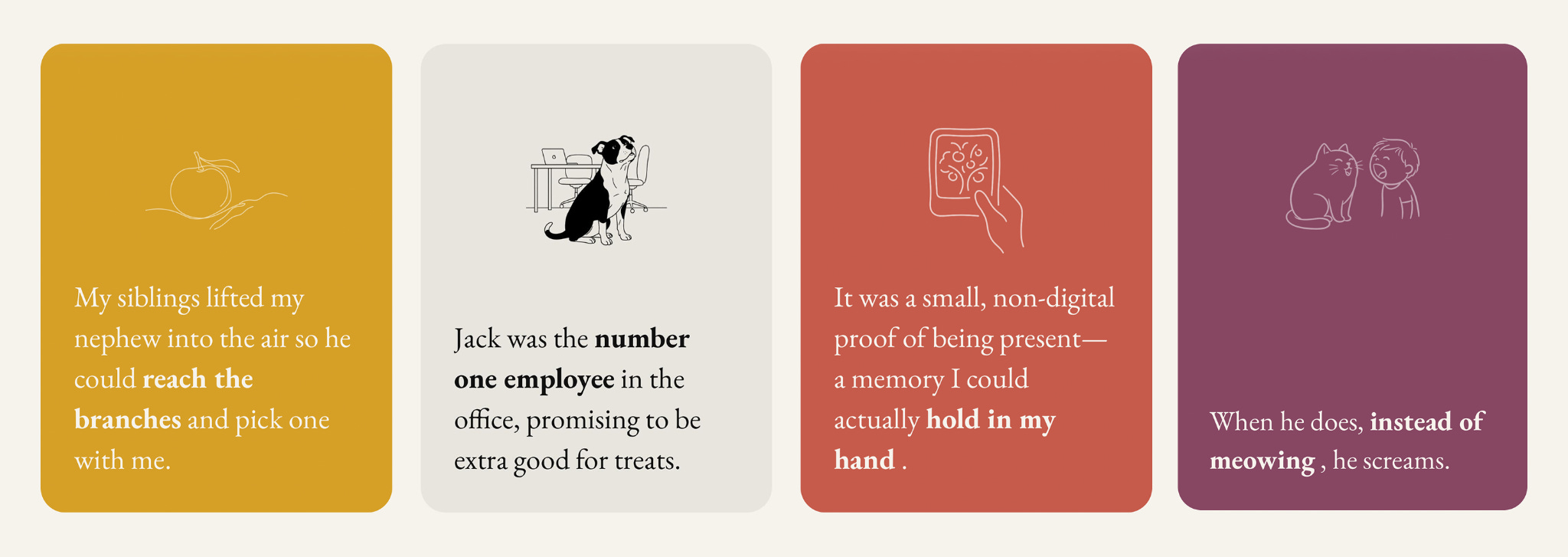
For Jared, the hook was always the social part, specifically sharing with your friends. For me, the hook was making storytelling itself feel visual and alive. Bringing a story to life, through sketches and through someone’s own voice and words.
How AI fit into the process
Throughout all of this, AI was a brainstorming partner, and part of the process, but never the only way I designed.
For the initial look and feel from the illustrations, the colors, the typography, I started by pulling real-world inspiration. A lot of the illustration style was actually inspired by Heytea; I’d go once in a while, and I remember being so in love with their menu illustrations from their hand-drawn and minimal style. For colors I kept coming back to Osulloc tea, because their packaging has these really beautiful jewel tones.
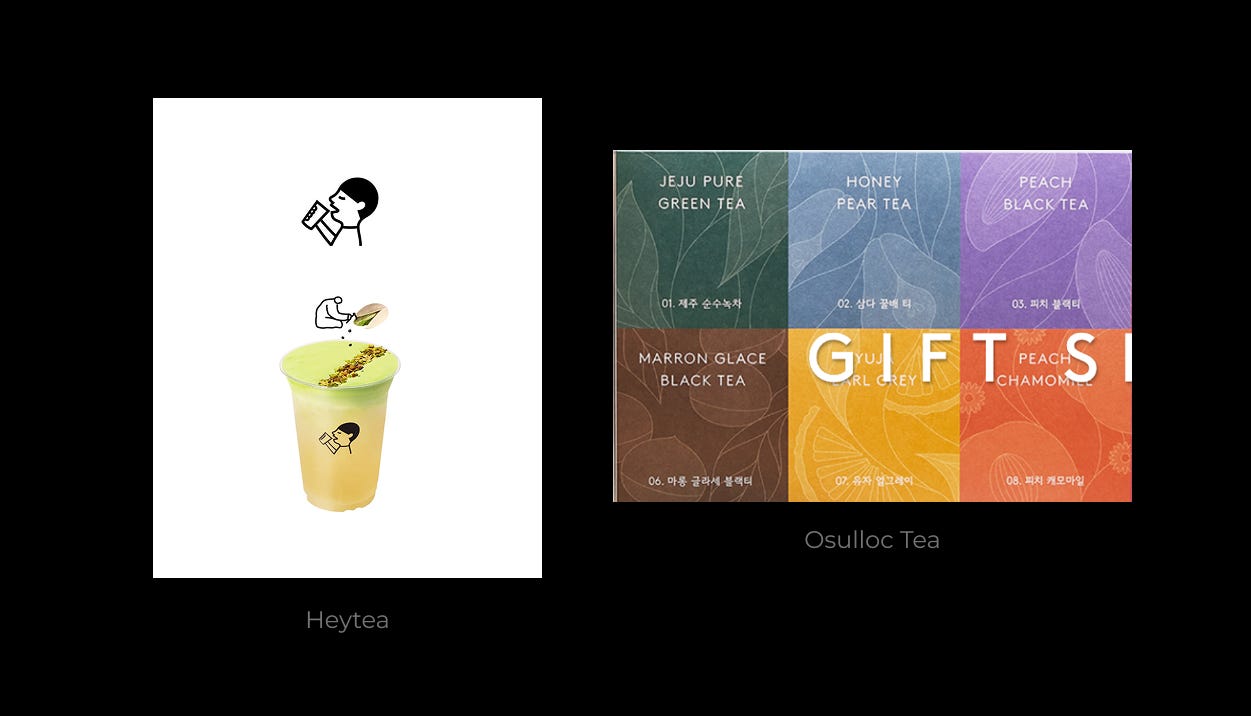
What I did was drop all of that inspiration into ChatGPT: here’s the style I want, can you suggest some palettes and typography to match, give me a few options to narrow down. Then I’d take those options and pressure-test everything myself in Figma, because I’m a visual person and I need to see how things actually pair together. I just needed a partner to pull a few directions for me so I wasn’t combing through everything alone.
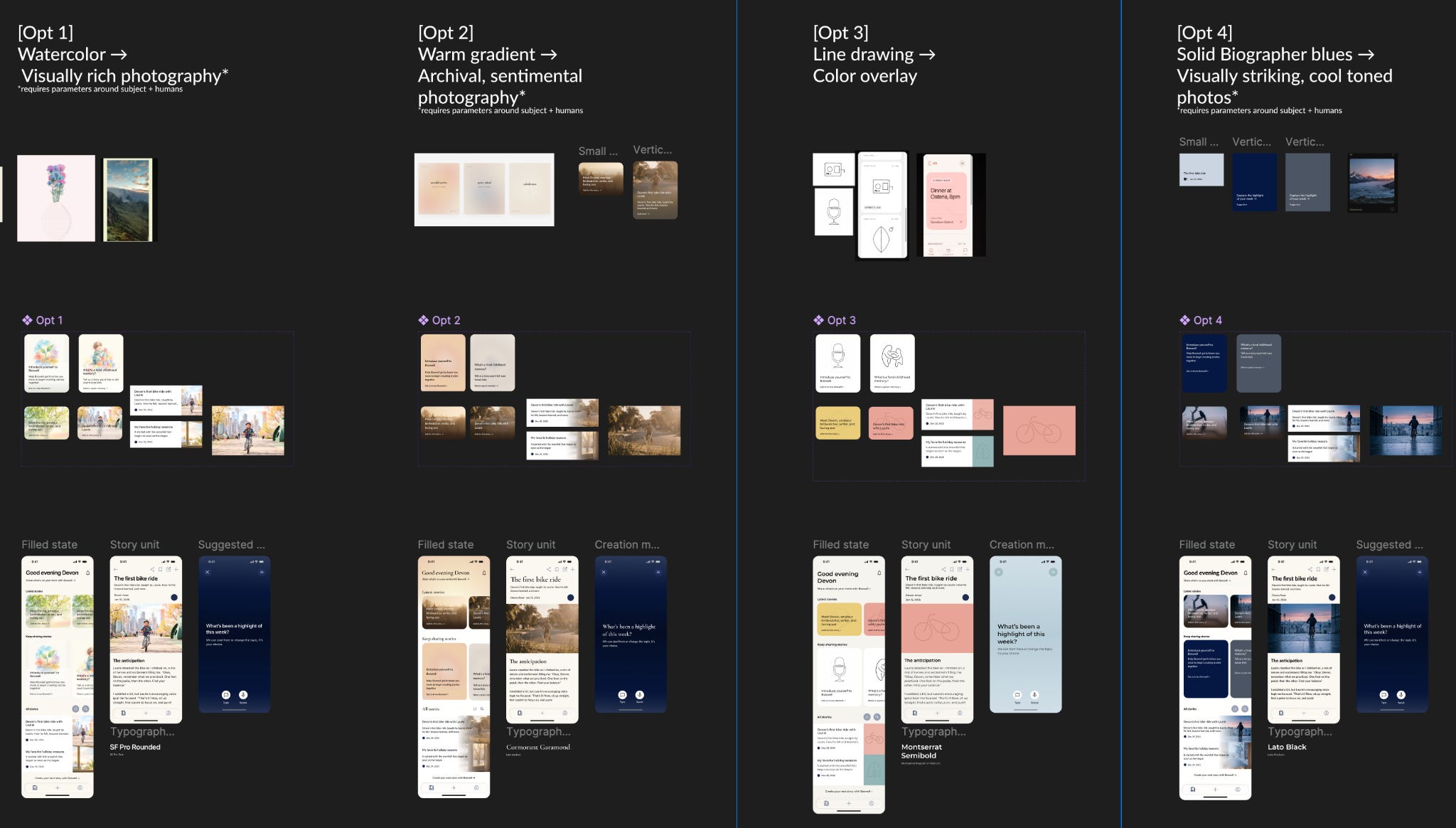
The illustrations evolved in a way I didn’t expect. I tried photography and styled photos first, but somehow these black-and-white outline drawings came out and really resonated with the team. At first we thought we’d pre-generate a whole library so everything stayed consistent. Then we realized…why not use the same prompt and generate in real time for each postcard? That’s where the magic happened. Every time someone creates a postcard, the LLM draws something just for it. The sketch-like, rounded softness gave everything a human touch, which felt important when the whole thing runs on an LLM.
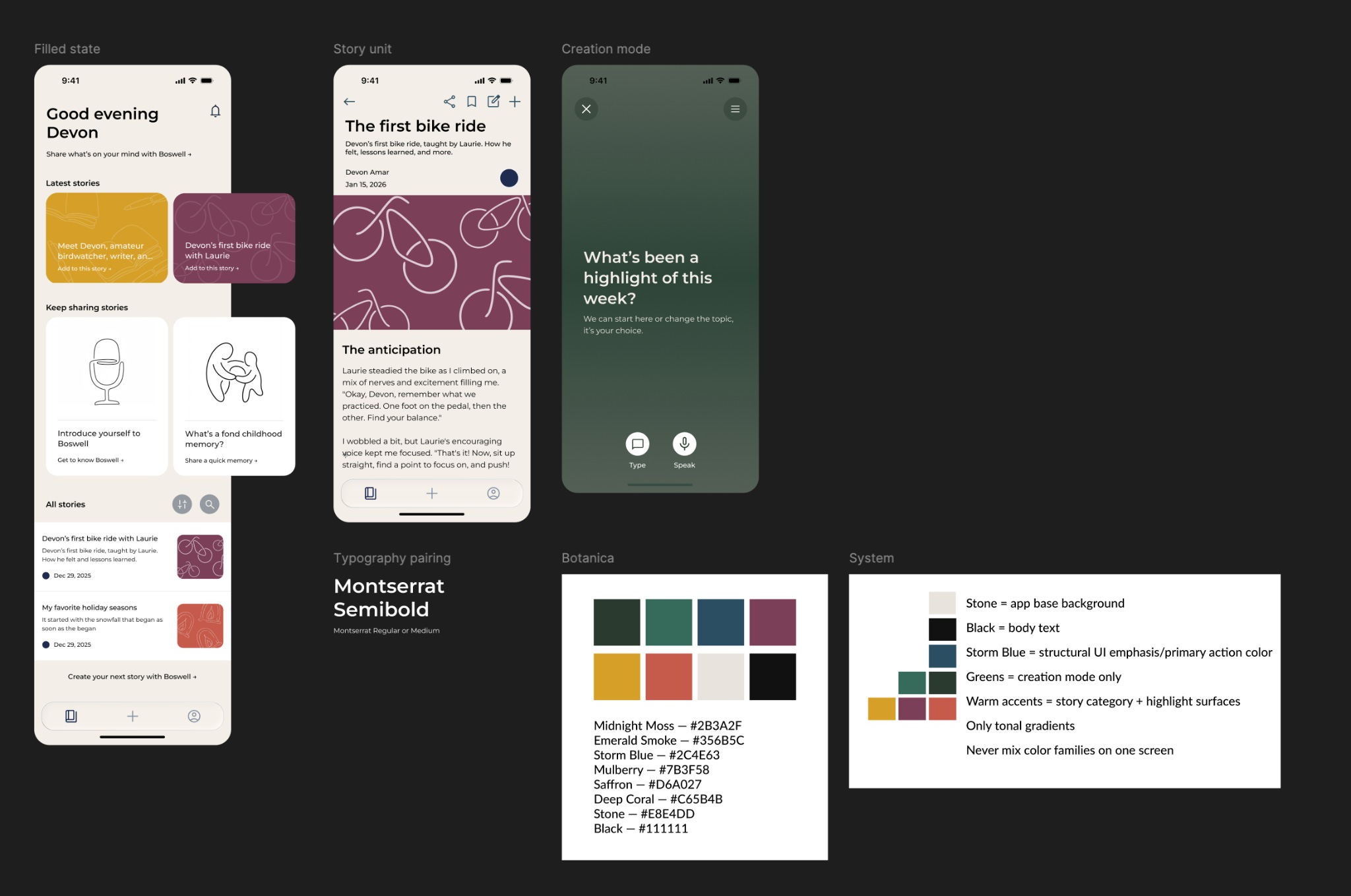
The filters followed a similar rhythm each time: I used cosmos to moodboard and pull real-life examples, Claude to write the prompts and define the illustration style, Figma AI to generate and iterate. I picked up Cursor and Claude Design for prototyping too. But at the end of the day I’m still the designer. I can be handed every option in the world and I still want control, because for filters, we were creating a brand new look and feel for every set.
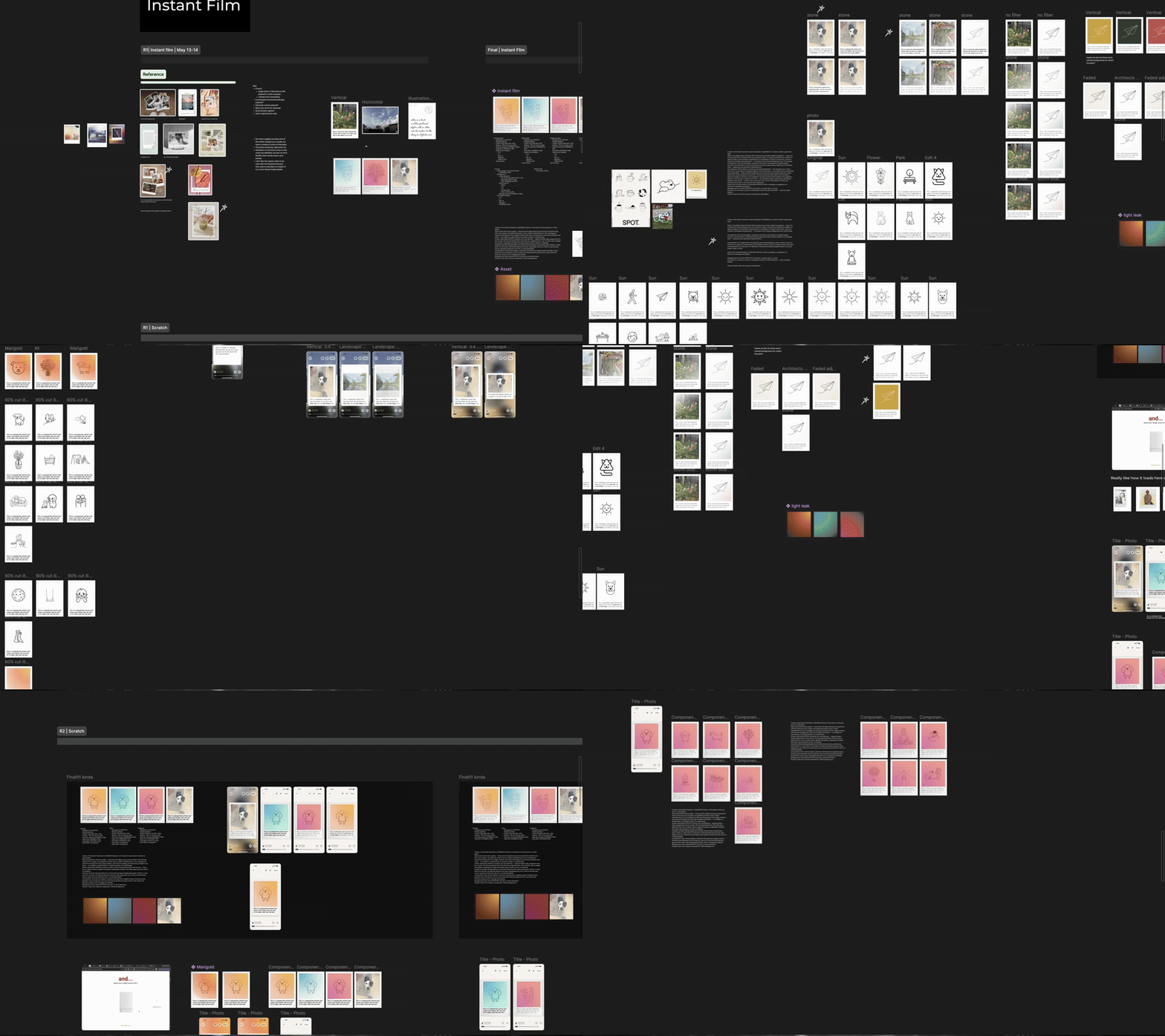
And there’s a flip side I want to be honest about. There were moments when AI just got in my way when I needed to sit and think, and the tools kept nudging me toward iterating instead. There were times it was genuinely more work to use AI than to just build the thing myself. I remember trying to get Claude Design to build a prototype I had in my head, and it couldn’t figure it out (to be fair, this was the first week the tool had launched). I went back to Cursor, and even then, part of me just wanted to open Figma and do it the “old-fashioned way”.
I tell other people this, and I remind myself: it’s worth picking up the tools to learn them. But not at the cost of doing something simple that’s right in front of you.
I don’t actually believe in always being efficient. One of the things I love most in my practice, whether painting or hands-on hobbies, is doing the work, going through the process, and enjoying the craft. When you get too lost in the tooling, it gets rough. I’m not someone who thinks AI is going to be the only tool I reach for. I love the design process itself. AI is one part of it, and I don’t want it taking up too much of my brainpower, because I still need to make something I’m proud of at the end of the day. That can be from using an AI tool, or simply from my own brain.
What surprised me
If I think about what surprised me most, it’s the speed. This is the same team I had worked together with over ten years ago at Fundera. In the time we’ve been apart there’s been a lot of growing up across all of us, and the way we build now is just tremendously different and fast.
None of us came in knowing what AI could really do and I think that’s exactly why “let’s just try” worked. We trusted each other enough to experiment and get it wrong in front of each other and keep going.
What I realized is that you have to have the candid, hard conversations and you have to have them kindly. Because it sucks when you work on something as hard as you can, and then the team decides we’re not doing this anymore. It’s so easy to crumple that up and throw it away…metaphorically, and even more so now with AI.
Jared always asked us: are we having fun? Because if it’s something we genuinely don’t believe in, it’s not worth it. But if it’s fun, if we’re learning, if we’re excited to build something and see what happens. That’s the whole point.
The people you work with matter more than anything. Being collaborative, willing to let go of your ego, willing to ask the hard questions, willing to push each other a little outside your comfort zones. We’ve all had to accept that roles look different now. But we still respect each other’s expertise.
I remember Avi reminding me: “We hired you for your taste. You will not be replaced by [insert any “design-killing AI tool”]. And in turn, I encourage the team and arm them with our UI kits and guidance to build things and to just start. I think it’s great that more people can build. I can always come back and layer in my expertise. That layer, the one that makes it feel human, that’s still mine.
Making storytelling, magical
What makes Postcards special to me is a little different from what Jared wrote about. For him it’s the social layer and connecting with people you actually know. For me, it’s the storytelling.
And honestly, the same thing we kept telling each other while building it, is what we share with someone trying out the app: don’t overthink it. Just try. Drop in a voice note, type some stuff, upload a photo, and let it make something beautiful back. You can share it, or not.
I think about this even now, writing this that there are so many drafts before I feel okay putting something into the world. There’s something really nice about a product that doesn’t ask you to be perfect. You can always go back and edit. LLMs aren’t perfect either. But that first postcard that comes back feels like magic.
That’s the crux of it for me. Helping people be themselves and share something without the weight of overthinking it. To create something short and sweet for the people they love, because they trust we can capture their essence. That’s what makes Postcards magical. At least, that’s what we’re going for.
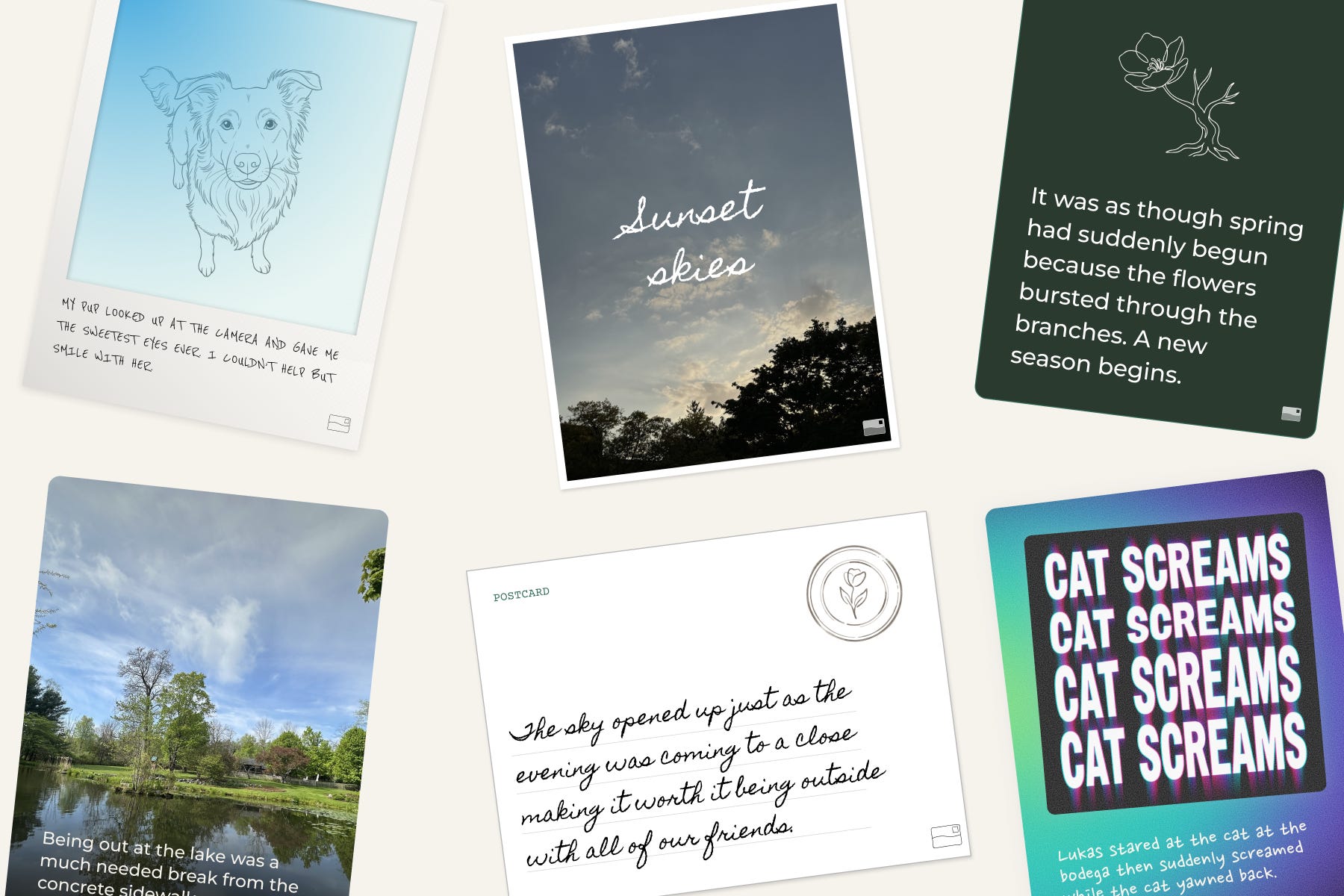
Postcards is live on iOS. Try it out and send us your feedback. We’d love to hear what you think.
And if you’re a founder or a small team building something meaningful, looking for an embedded design partner who works like this: intentional, fast-moving, comfortable with AI as part of the process but not the whole thing, I’d love to hear from you. I run & luo studio, and you can reach me at leslie@andluo.studio.